
Micron Technology has announced a strategic investment in materials specialist Indium Corporation to expand critical minerals processing and high-purity chemical manufacturing in Central New York. The agreement restarts domestic refining of mineral inputs essential to advanced memory fabrication, directly supporting Micron’s broader $3 billion initiative to secure reliable domestic supplies of foundational materials.
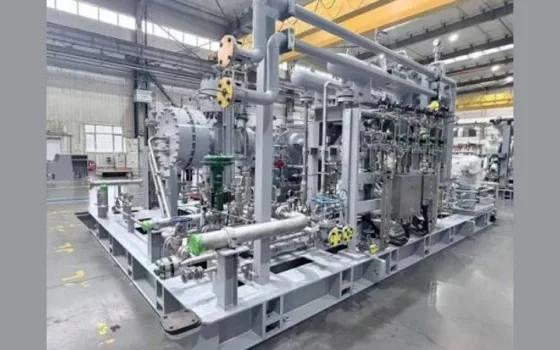
Under the bilateral pact, Micron provides capital funding enabling Indium Corporation to scale refining and chemical processing facilities in Rome, New York. In return, the companies will enter into a multi-year supply agreement granting Micron secured procurement access to semiconductor-grade, high-purity minerals. The move targets vulnerabilities stemming from geographically concentrated refining assets abroad, mitigating supply chain risks for domestic wafer fabrication lines.
Advanced memory architectures—including high-bandwidth memory (HBM) and sub-10nm DRAM—require high-purity elements for chemical vapor deposition, atomic layer deposition, interconnect metallization, and thermal interface materials. Trace impurities in raw precursor stocks cause lattice dislocation defects and structural leakage across high-aspect-ratio memory stacks. By co-locating refining infrastructure in New York, Micron mitigates transit contamination risks and establishes a regional materials corridor feeding its planned multi-fab complex in Clay, New York.
Ben Tessone, Senior Vice President and Chief Procurement Officer at Micron, noted that cutting-edge memory production requires securing supply tiers well beyond direct tier-one vendors. He emphasized that partnering with Indium Corporation to revive domestic processing creates a resilient supply chain essential to Micron’s operational roadmap and national manufacturing security. Ross Berntson, President and CEO of Indium Corporation, stated that the partnership builds on the company’s 90-year manufacturing history in Central New York, expanding the domestic availability of semiconductor-grade critical minerals.
The alliance aligns with Micron’s long-term strategy to deploy more than $250 billion across domestic fabrication and technology programs through 2035. As artificial intelligence workloads demand denser DRAM and 3D NAND configurations, foundries cannot operate without pure elemental feedstocks. By funding upstream refining capacity directly within its regional fabrication footprint, Micron addresses supply chain vulnerabilities, creating a template for domestic materials integration across the global semiconductor industry.