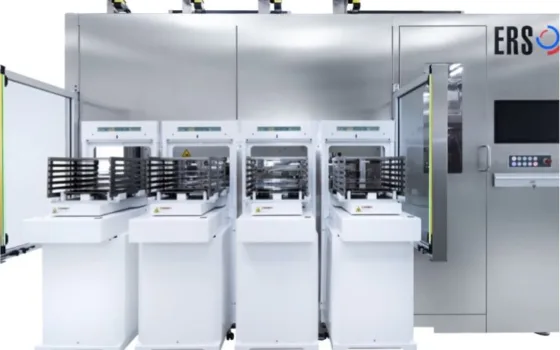

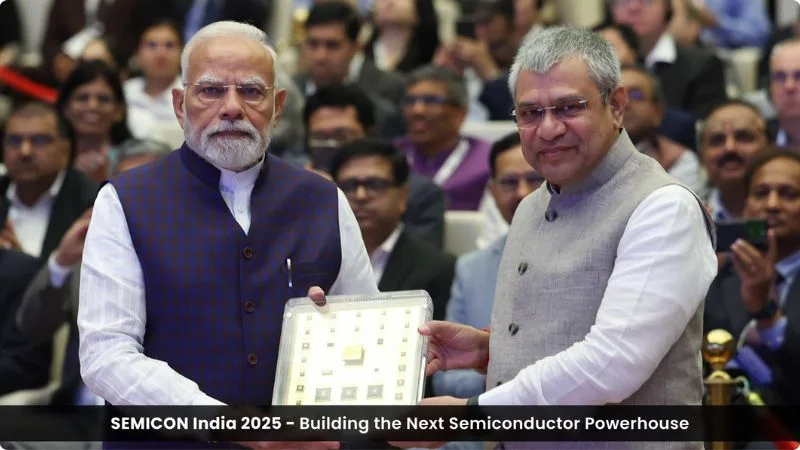
India is aggressively expanding its domestic semiconductor roadmap beyond downstream assembly and testing, targeting high-volume chip manufacturing for automotive systems, consumer appliances, and mission-critical power transmission infrastructure over the next five years. Outlining this strategic evolution, Union Minister for Electronics and IT Ashwini Vaishnaw confirmed that the government has committed ₹1.27 lakh crore under the second phase of its semiconductor programme to foster end-to-end capabilities spanning chip design, wafer fabrication, equipment manufacturing, and specialty materials.
The policy shift aims directly at addressing the high-volume semiconductors that drive real-world mechanical and electrical systems. While leading-edge sub-nanometer logic captures industry headlines, legacy and specialty process nodes power foundational industrial infrastructure. India’s strategy seeks to replace import dependencies in everyday electronics, vehicles, and energy networks with domestically designed and fabricated silicon.
“There are many chips which go in automobiles, in cars, scooters and motorcycles, that are manufactured in our country. We should be able to have many of those chips designed and manufactured in India,” Vaishnaw stated, emphasizing the massive auto-component market. Modern connected vehicles and electric platforms rely heavily on microcontrollers, body control modules, sensor interfaces, and battery management ICs, making domestic silicon integration a logical step for automotive OEMs.
A parallel industrial thrust centers on power electronics within the national electrical transmission network. The minister emphasized the need to build specialized semiconductors engineered for transmission lines, transformers, and industrial power converters. High-voltage power devices, including insulated-gate bipolar transistors (IGBTs) and emerging wide-bandgap materials like Silicon Carbide (SiC), form the operational backbone of grid transformers, high-voltage DC (HVDC) transmission lines, and renewable energy conversion. Producing these components locally protects vital energy assets while ensuring localized supply chains for heavy industrial infrastructure.
In consumer electronics, the focus extends to mass-market appliances such as televisions, washing machines, and refrigerators. Vaishnaw highlighted that although consumers see only the final display or appliance housing, internal semiconductors serve as the critical “brain and heart.”
To illustrate practical manufacturing capabilities under construction, Vaishnaw pointed to an upcoming display-control module facility in Uttar Pradesh. The module governs image processing and panel drive logic for large display screens. In display fabrication, the minister highlighted progress by Crystal Matrix, which is transitioning from 90-micron architectures down to complex 40-micron fabrication levels alongside a dedicated domestic R&D unit. This path aims to anchor complete end-to-end assembly and display panel driver manufacturing within domestic cleanrooms.
The broader ₹1.27 lakh crore programme has already recorded approximately ₹1 lakh crore in investor interest, bolstered by major multinational equipment and materials projects including Applied Materials’ $5-billion India initiative, Lam Research’s proposed ₹10,000-crore investment, and Fujifilm’s ₹800-crore materials facility. By aligning fab incentives with domestic demand from automotive assembly plants, power grids, and appliance makers, India is anchoring its front-end fabrication push into proven, high-demand industrial sectors.