
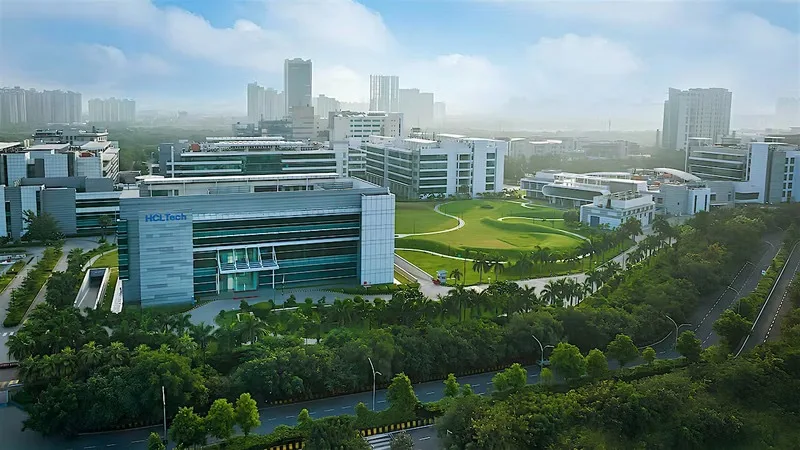
Indian technology services provider HCL Technologies (HCLTech) and Rapidus Corporation, the Japanese venture establishing advanced logic semiconductor fabrication facilities, have inaugurated two dedicated semiconductor development centres in India. Located in Bengaluru and Hubli, the newly established hubs are designed to directly support Rapidus’ evolving front-end engineering, design infrastructure, and manufacturing ramp requirements.
The two centres will deliver specialized engineering capabilities vital to advanced semiconductor manufacturing. Key technical focus areas include mask design, design infrastructure, Process Design Kit (PDK) development, Design Technology Co-Optimization (DTCO), and physical layout design. Alongside the technical deliverables, HCLTech will partner with Rapidus to develop a sustained pipeline of Indian semiconductor engineering professionals to support the Japanese chipmaker’s long-term technical operations.
In modern wafer manufacturing, design enablement functions such as PDK creation and DTCO serve as the foundational bridge connecting physical fabrication processes to system-level chip design. As advanced logic nodes move toward sub-2nm gate-all-around architectures, DTCO enables foundry process engineers and circuit designers to concurrently optimize transistor geometry, materials, and standard-cell layouts. This parallel iteration maximizes power, performance, area, and wafer yield prior to commercial high-volume manufacturing.
Dr. Atsuyoshi Koike, Representative Director and Chief Executive Officer of Rapidus Corporation, stated that the collaboration allows the company to tap into India’s expanding pool of semiconductor engineering talent and build dedicated capabilities that complement its manufacturing footprint in Japan. He noted that the initiative will cultivate the specialized technical resources required to advance Rapidus’ long-term fabrication roadmap. C. Vijayakumar, Chief Executive Officer and Managing Director of HCLTech, pointed out that advanced semiconductors will define technological progress over the coming decade. He added that the strategic partnership leverages HCLTech’s engineering expertise to accelerate chip adoption, compress product cycles, and strengthen bilateral semiconductor ties between India and Japan.
The establishment of operations in both Bengaluru and Hubli highlights the geographic expansion of India’s microelectronics ecosystem into secondary technology hubs. For the domestic electronics sector, providing foundational wafer enablement services—such as mask synthesis and DTCO—represents high-value technical integration into global supply chains. By anchoring core design-to-manufacturing support for Rapidus within Karnataka, the initiative reinforces India’s growing role as a strategic engineering partner for international logic foundries.