
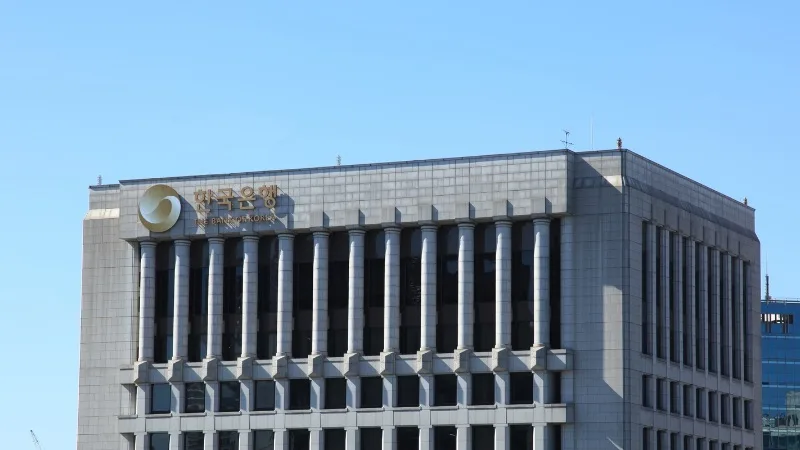
South Korea’s semiconductor export earnings could experience a shortfall of between $50 billion and $100 billion compared to earlier forecasts if major United States technology companies decelerate capital spending on artificial intelligence infrastructure next year, according to data from the country’s central bank. In a written response submitted to lawmaker Ahn Do-geol, the Bank of Korea (BOK) modelled a “pessimistic scenario” to assess the economic fallout if North American hyperscalers curb their aggressive infrastructure outlays.
Under the stress-test framework, a sudden contraction in overseas chip shipments would reduce South Korea’s gross domestic product (GDP) growth rate by approximately 0.4 percentage points next year. The export shortfall would also drive the country’s current account surplus well below the central bank’s initial projection of $430 billion for 2027. The econometric model factored in an estimated 10 percent drop in Korean semiconductor unit export prices, reflecting memory market softening under demand deceleration.
The central bank’s evaluation underscores acute structural vulnerabilities stemming from the country’s concentrated export basket. Semiconductors currently account for roughly half of South Korea’s total export value, leaving the nation’s industrial output highly exposed to procurement cycles driven by a small cohort of foreign data centre operators. With domestic manufacturers dominating global dynamic random-access memory (DRAM), high-bandwidth memory (HBM), and NAND flash supplies, any moderation in downstream server deployments immediately propagates upstream into Korean fab schedules.
According to the report, aggregate capital expenditure across five major US tech giants—Amazon, Google, Microsoft,Meta Platforms, and Oracle—has grown at an exceptional pace. Combined infrastructure outlays expanded from $40 billion last year to an estimated $80 billion this year, with capital forecasts projected to reach $110 billion next year.However, the BOK cautioned that considerable uncertainty remains over the ongoing trajectory of AI hardware demand and the broader memory chip business cycle.
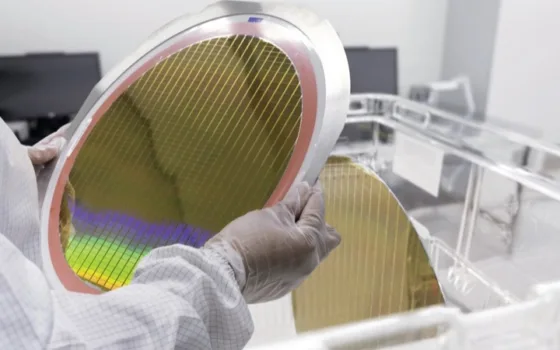
For wafer fabricators and packaging houses, any moderation in hyperscaler capital expenditure would force adjustments to fab utilisation rates and cleanroom equipment delivery schedules. While demand for advanced server clusters has sustained elevated wafer starts and premium pricing for high-density components, memory suppliers remain exposed to cyclical digestion phases across North American server farms. If hyperscalers temper their purchasing velocity, Korean chipmakers will face rising inventory pressures and accelerated margin erosion across high-volume production lines.