
A central theme of the discussion revolved around overcoming structural challenges in building a cohesive semiconductor supply chain. Manickam outlined the crucial role that small and medium enterprises (MSMEs) and next-generation entrepreneurs must play, particularly through targeted investments under ₹100 crore. By diversifying from traditional industries into specialized technology sectors, these players can establish the essential tier-two and tier-three support systems required for fabs and product companies to thrive. Looking ahead, he expressed confidence that local manufacturing could fulfill 20 to 30 percent of India’s semiconductor requirements within the next five years, securing the nation’s technological independence.
Manickam shared insights into iVP Semi’s targeted focus on power electronics, an area driven by India’s rapid push toward electrification, electric vehicles (EVs), and renewable energy systems. Addressing the complete reliance on imports to meet domestic demand, he emphasized that localizing chip design and assembly serves as the immediate priority to build self-reliance before expanding into global export markets.
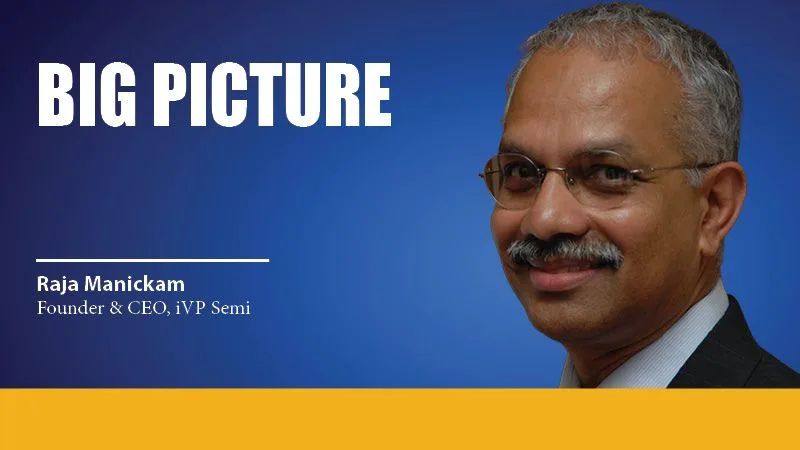
In a recent interaction with Vaishali Chauhan, Raja Manickam, Founder and CEO of iVP Semi, discussed the rapidly evolving landscape of India’s semiconductor ecosystem during his participation at Semicon India. Highlighted as a pivotal turning point for the nation’s high-tech manufacturing, the exchange underscored India’s transition from a design-focused hub to a full-fledged semiconductor manufacturing destination.
How has Semicon India been for your company so far, what kind of response have you received from visitors and customers, and what are some of the key conversations happening at the event?
I think this Semicon India has been quite different from the previous ones. We see a lot more participation, which is very relevant. I think people are looking at India as a manufacturing hub as well as a development hub. So, I see a lot of foreign companies very keen on coming here, and I also see a lot of people willing to invest in semiconductors. I would say that we are at some kind of inflexion point in the semiconductor industry growing in India.
What are you showcasing at Semicon India, and what are some key solutions and developments you would like the industry to know about?
We are specifically working on power devices. I believe that within the Indian market itself, we are going through renewable energy and electrification and so on. So that is where a lot of semiconductors are involved. We, as a company, are in that space. What we are also seeing is there is a lot of support for localising and building the industry. We are in the power sector.
India’s semiconductor ecosystem is developing rapidly. What opportunities are you seeing in India’s Indian market, and what you see the strongest potential for your company?
As I mentioned, power is one of the fastest-growing sectors, and with all the geopolitical issues, I think it’s going to accelerate even more to replace fossil fuels- oil and coal and all that with renewable energy, and that requires a lot of semiconductors, a lot of storage because of renewable energy. So just the Indian market itself is a huge market. So today we are importing 100%. I think it’s as a localisation and replacement, we have a huge market.
And I think once we have developed this, this will also become an opportunity for us to go global. We are already setting up through these Semicon India relationships so that eventually, three, four, five years from now, we could also become an export business for semiconductors.
What are some key challenges you are seeing in India’s semiconductor ecosystem today? And what role can industry players like your company play in addressing them?
We definitely need an ecosystem to start building so that they can support this. Semiconductors cannot survive with just one company. It requires a lot of companies coming in together. What I’m seeing is opportunities for tier two, tier three, MSME companies, small and medium-sized, who are in the traditional business; let’s say they are in the cement business or oil, coal business or the traditional businesses.
They are now the second or third generation looking at coming into a tech business. So I see a lot of youngsters wanting to come, and they will play in the MSMEs, medium and small scale, because there’ll be less than 100 crore type of investments.
How do you see India’s semiconductor industry is Indian evolving over the next few years? And what are your priorities in Indian market?
I think, you know, we have to control our own destiny. As you can see, each country is trying to protect itself. So, India being a very large country, we cannot afford to just be dependent on foreign semiconductors. I think we are starting off with some of the basic things that we can do.
There’s a lot of opportunities there. And, you know, the fabs and all of those kinds of things will slowly come into play. I think, you know, say five years from now, at least 20, 30 per cent of requirements will be met locally.