
South Korean outsourced semiconductor assembly and test (OSAT) provider LB Semicon has signed a memorandum of understanding (MOU) with Gumi City to expand its backend production lines for power semiconductors.
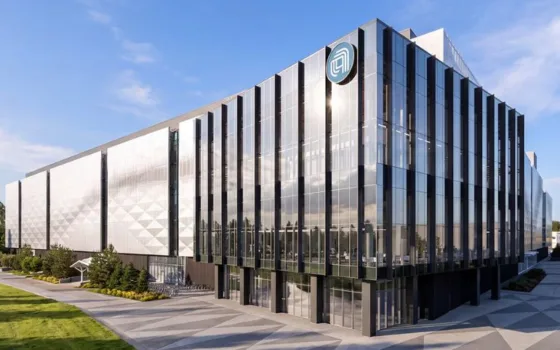
The agreement was signed at Gumi City Hall with support from Gyeongsangbuk-do province and the Korea Industrial Complex Corporation. The ceremony was attended by LB Semicon CEO Daekyo Lee, Gumi Mayor Kim Jang-ho, and regional investment officials. Under the partnership, local authorities will offer administrative support to fast-track plant operations and strengthen the local microelectronics supply chain.
LB Semicon has built its business around backend processing for display driver ICs (DDIs), CMOS image sensors, and power management integrated circuits (PMICs). Its capabilities span wafer bumping, functional testing, precision dicing, and packaging, as well as specialized services like back grinding and back metallization. Following its absorption of subsidiary LB Lusem, the company integrated the Gumi manufacturing facility to run chip-on-film (COF) packaging and power chip operations.
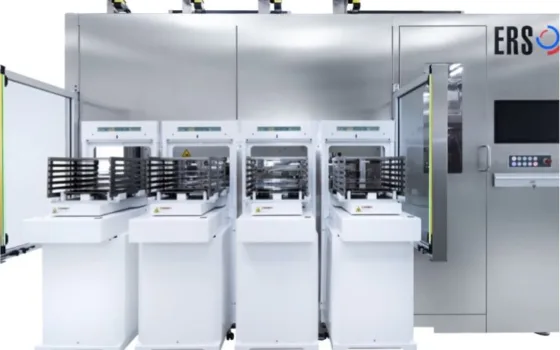
The centerpiece of this new Gumi expansion is a temporary bonding and debonding (TBDB) line for carrier wafers. In modern power semiconductors, thinner wafers are essential because they reduce electrical resistance and boost energy efficiency. However, making silicon wafers extremely thin leaves them fragile and prone to cracking during manufacturing. TBDB technology temporarily glues the ultra-thin device wafer to a rigid carrier wafer for mechanical support during grinding and metallization, releasing it cleanly once processing finishes.
This investment marks an important strategic pivot for LB Semicon as it diversifies away from its traditional reliance on display chips into high-margin power and system silicon. The company recently completed qualification for a Qualcomm PMIC, handling the entire backend cycle across bumping, testing, and packaging, and shipped its initial mass-production batches last month.
Gumi City expects the expanded facility to generate new manufacturing jobs, elevate packaging capabilities in the Gumi Industrial Complex, and support stable supply chains for critical automotive and industrial power chips.