
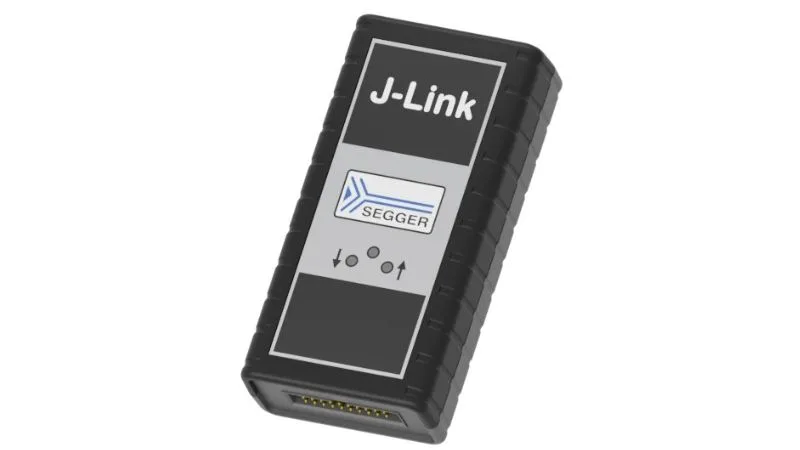
Embedded software tooling specialist Embedder and debug instrumentation leader SEGGER Microcontroller have finalized a technical integration that links automated software agents directly to target hardware via debug and trace probes. The partnership grants Embedder’s development environment direct programmatic control over SEGGER’s J-Link and J-Trace hardware interfaces, establishing an automated hardware-in-the-loop (HIL) pipeline for testing, execution analysis, and on-chip debugging prior to production deployment.
While modern software engineering workflows have adopted continuous integration and automated test suites, low-level firmware engineering remains constrained by physical silicon dependencies. Microcontrollers feature non-deterministic peripheral timings, volatile register states, and bus-level contention issues that pure software emulation and host-side simulations fail to replicate accurately. Consequently, embedded engineering teams expend substantial bench hours manually flashing target boards, probing test points, and analyzing trace outputs to catch silicon-specific runtime faults.
Autonomous Hardware-in-the-Loop Debugging
Under the joint implementation, the platform interfaces directly with SEGGER’s hardware probes over standard JTAG and SWD (Serial Wire Debug) interfaces. Instead of relying on manual operator intervention, the system manages the complete device programming and inspection sequence:
Target Flashing & Memory Manipulation: Programs compiled binaries directly into internal flash or external SPI memories, managing sector erasure, page programming, and verification routines.
Execution State Control: Halts CPU cores, injects hardware breakpoints, steps through machine instructions, and directly inspects core registers, peripheral SFRs (Special Function Registers), and SRAM addresses.
Low-Overhead Telemetry Monitoring: Uses SEGGER’s Real Time Transfer (RTT) protocol to capture bidirectional target diagnostics at microsecond speeds without stalling CPU execution cycles.
Trace-Based Failure Triage: Leverages J-Trace streaming capabilities to capture complete instruction execution histories, isolating stack overflows, unhandled hard faults, and race conditions.
When a build experiences an execution failure or memory leak on the target microcontroller, the agent captures register dumps and call stacks, isolates the faulting routine, and modifies the source code. It then re-flashes the physical board autonomously, iterating the cycle until the firmware passes hardware-level validation metrics.
Extensive Microcontroller Ecosystem Support
The integration leverages SEGGER’s broad hardware footprint, which supports over 15,000 distinct devices spanning ARM Cortex-M/A/R cores, RISC-V platforms, and proprietary architectures.
“AI tools are becoming much more than utilities for generating code. They can analyze existing firmware, investigate unexpected behavior, identify bugs, and help develop and verify solutions,” noted Erik Loehr, Product Manager at SEGGER. “In embedded systems, however, this requires direct access to the real target hardware. Combining our debug and trace technology enables participation across the entire embedded development cycle, from implementation to validation on the physical device.”
“The primary bottleneck in embedded engineering has shifted from writing initial firmware routines to verifying that code functions accurately on real hardware,” explained Bob Wei, CTO and founder of Embedder. “Giving direct control over J-Link and J-Trace probes allows automated agents to test, debug, and optimize execution on physical silicon.”
By bridging software automation with physical hardware debuggers, the integration removes manual bench-testing steps, accelerating deployment cycles for complex industrial, automotive, and IoT microcontroller systems.