
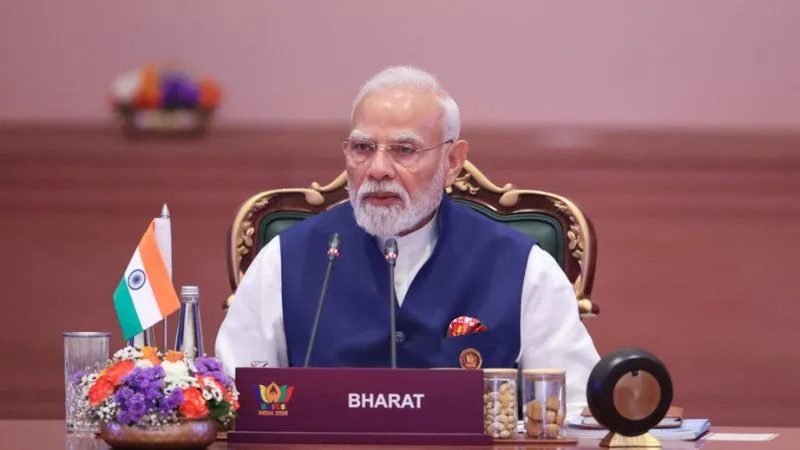
Prime Minister Narendra Modi will open the fifth edition of SEMICON India on September 17, setting off three days of strategy talks, industry networking, and displays of India’s growing semiconductor and electronics network.
The event runs from September 17 to September 19 at the Yashobhoomi convention center in New Delhi. It is organized by the India Semiconductor Mission, the Ministry of Electronics and Information Technology, and SEMI, the international trade association for the electronics supply chain.
This year’s central theme focuses on moving from raw materials to complete systems, highlighting India’s efforts to build a complete chip manufacturing network within its borders. Government officials note that the conference reflects a shift from establishing basic trust to showing real production ability across every stage of the market.
Exhibition and Participation Highlights
The conference features large-scale participation from both local and international companies across 15,000 square meters of exhibition space:
-
Exhibitors: More than 600 total exhibitors, which includes 300 international companies.
-
Speakers: Over 150 industry experts, executives, and experts sharing insights.
-
Pavilions: 6 country-specific pavilions and 12 Indian state government pavilions.
-
Specialized Zones: Dedicated areas for talent development, a startup space showing 40 young companies, a student hackathon, and a forum focused on women leaders.
-
Global Participants: Major global and local companies present include ASML, Applied Materials, Micron, Tata Electronics, IBM Research, NXP, Infineon, Lam Research, CG Power, and Rapidus.
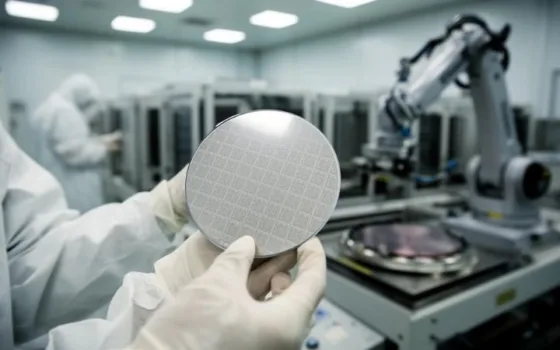
A new interactive display area takes visitors through the complete process of chip creation, from basic raw materials to final electronic systems.
Policy and Production Momentum
The event coincides with visible progress in India’s domestic chip policies. Under the initial Semicon India initiative, the government cleared 12 distinct projects to strengthen domestic manufacturing. Three of those original projects have now moved past initial development and started commercial output.
Following this progress, the Union Cabinet has cleared the next phase of the program, known as Semicon 2.0. This secondary policy centers on six main focus areas designed to speed up setup times and scale up local supply chains.
Alongside large manufacturing plants, official programs are targeting design and talent growth:
-
Electronic Design Automation tools have been distributed to over 400 universities and 105 design startups.
-
24 startups have received direct support under the Design Linked Incentive scheme to build original chip designs.
Market Outlook and Growth Targets
These national efforts line up with major growth in global and domestic demand. As artificial intelligence, electric vehicles, and modern computing power spread, the worldwide semiconductor market is projected to grow from roughly 796 billion dollars in 2025 to over 2 trillion dollars by 2030.
At the local level, India’s own chip demand stands at approximately 50 billion dollars today and is expected to hit 103 billion dollars by 2030. Through these annual gatherings, government planners and industry groups aim to pull in steady investment, secure technological partnerships, and train the local workforce to meet these target figures.