

Intel Corporation has formally joined the Semiconductor Pathways Fund, a national cross-industry coalition administered by the Last Mile Education Fund to mitigate domestic technical talent attrition. Established in November 2025 by founding partner Applied Materials alongside foundational investments from Lam Research, the KLA Foundation, and Cadence Design Systems, the coalition subsequently added the AMD Foundation and Intel Corporation. Operating as an industry alliance of six major semiconductor and design automation leaders, the initiative is working toward a $20 million funding target to graduate 6,700 engineering and technician students by 2028.
The program directly confronts a systemic bottleneck across the microelectronics value chain: mid-degree student attrition caused by sudden financial distress. While federal industrial policies like the CHIPS and Science Act commit billions of dollars to cleanroom brick-and-mortar facilities and domestic manufacturing tools, fab operational readiness hinges entirely on qualified personnel. A joint projection by the Semiconductor Industry Association (SIA) and Oxford Economics indicates the United States semiconductor industry will add nearly 115,000 jobs by 2030, with roughly 67,000 of those roles at risk of remaining unfilled under baseline educational throughput. A substantial portion of this deficit stems not from academic disqualification, but from solvable, emergency personal expenses.
To prevent student dropouts during critical academic phases, the Semiconductor Pathways Fund deploys flexible, rapid micro-grants averaging less than $3,000. These awards bridge non-tuition financial emergencies, including transportation breakdowns, family healthcare obligations, unpaid administrative fee balances, and sudden housing shortfalls. Eligible recipients include undergraduate and technician candidates within four semesters of completion who are enrolled in core microelectronic engineering domains, such as electrical, chemical, mechanical, materials science, robotics, and hands-on fab manufacturing curricula.
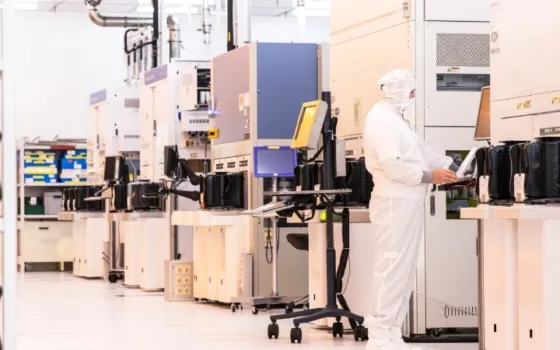
For integrated device manufacturers and fabrication equipment vendors, investing collaboratively in human capital marks a shift from isolated corporate recruiting toward shared workforce stewardship. Advanced 300-mm wafer fabs, extreme ultraviolet (EUV) lithography suites, and complex chemical vapor deposition environments require deep operational discipline. Losing students who have completed foundational STEM coursework weakens domestic manufacturing ramps and extends equipment qualification timelines.
By providing targeted, last-mile intervention capital, the coalition establishes an efficient, low-overhead safeguard for the nation’s technical labor pipeline. Securing graduating cohorts across electrical and process engineering ensures that expanding domestic fabrication plants and advanced packaging sites have the specialized technical workforce required to ramp commercial production lines.