
India, along with the United States and other eight nations, is among the signatories of the San Francisco Declaration on the Secure Foundations of Enduring Prosperity. This document aims to protect the key technologies and infrastructures of artificial intelligence supply chains. The agreement has been signed on November 15, when India became one of the founders of Pax Silica at the San Francisco Founders Retreat, which was organized by Jacob Helberg, US Under Secretary of State for Economic Affairs. This action comes in context of increasing international rivalry between the US and China in the realm of advanced technologies.
Besides India and the United States, other countries that signed the declaration include Australia, Israel, Japan, South Korea, Qatar, Singapore, the United Arab Emirates, and the United Kingdom. These ten countries aim to develop a common view on the key technologies and infrastructure needed for the Super Intelligence supply chain development. In order to implement these common objectives, the governments have agreed to create specific working groups to coordinate the technology collaboration and ensure supply chains protection.
Based on the US Department of State, the document is founded on the fundamental notion that the security of a nation depends on economic security. The document defines technologies, supply chains, and physical infrastructure whose disruption or unauthorized transfer of information would pose an economic and security risk.
To implement this initiative, the declaration has five different working groups. The first working group will develop policies to support continuous innovation. The second working group will work on the adoption of sophisticated AI technology in economic sectors. The third working group will manage collaboration along the entire AI supply chain. The fourth working group will develop safe harbors and supply chain security hubs, while the fifth working group will be responsible for overall system security and resilience.
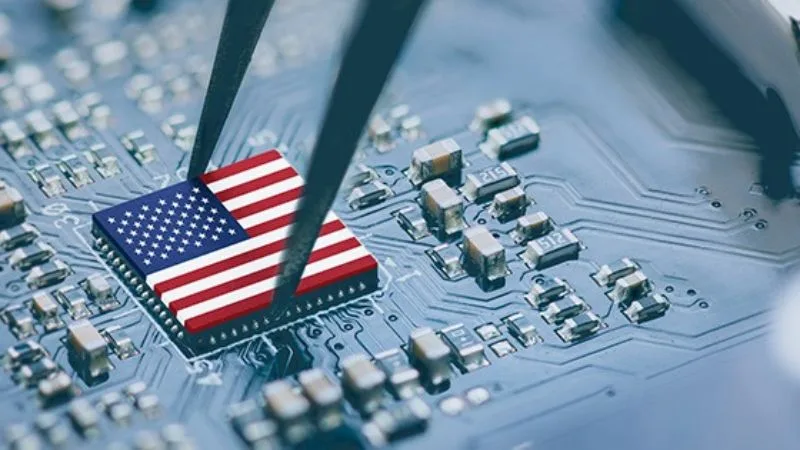
It is a broad scope of agreement, including all types of tools and materials used in creating artificial intelligence systems. It encompasses all kinds of computer software and microchips, as well as production materials and industrial machinery. In addition to physical tools and software, the statement also mentions critical infrastructure that needs protection, such as shipping ports, transportation routes, telecommunication systems, power grids, and major digital platforms.
One of the main objectives of all ten nations is to avoid single-source dependence of supply chains. Through diversification and development of technology partnerships with allied countries, the signatories aim to prevent supply shortages and avoid any economic pressure.
To sign this document means that Pax Silica, an international group led by the United States and formed as early as December 2025, has taken another huge step forward. The overall project aims to foster better cooperation between allied countries in such spheres as semiconductors, critical minerals, energy production, advanced manufacturing, and artificial intelligence computing infrastructure. India joined Pax Silica as one of its members in February, as a part of India AI Impact Summit which took place in New Delhi. In this regard, the signing ceremony took place on behalf of the US Ambassador to India Sergio Gor, Jacob Helberg, and India’s Electronics and Information Technology Secretary S Krishnan.