

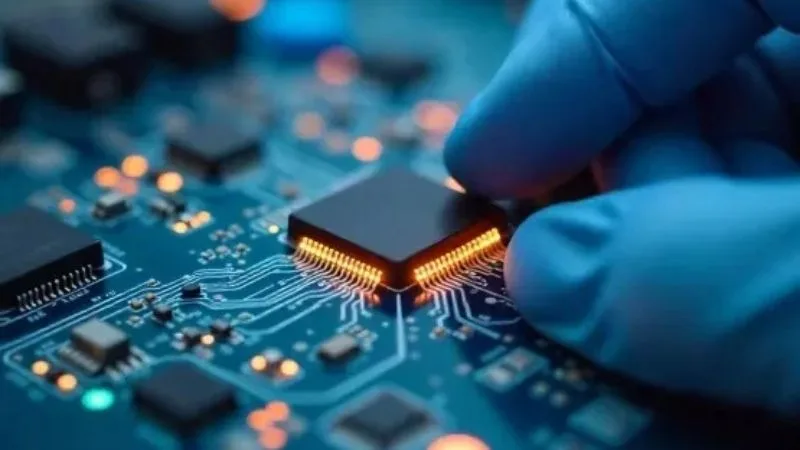
The Japanese manufacturer of semiconductor chips, MegaChips Corporation, has announced a collaboration with the Israeli tech company proteanTecs that focuses on health and performance monitoring of sophisticated electronic devices. Within the framework of this partnership, MegaChips will integrate the built-in chip sensors and data analytics software by proteanTecs into its future custom-designed Application-Specific Integrated Circuits (ASICs) and Large-Scale Integration (LSI).
The main aim of the partnership between the two companies is to provide the customer with full visibility inside the complex chip that is used in artificial intelligence and high-performance computing products. Using the micro-monitoring agents within the chip itself, both companies will provide the customer with full insight into the behavior of its semiconductors at any stage of the product’s lifecycle – from design phase to manufacturing and deployment in the real-world environment.
With the increasing complexity and power of current processors, it is becoming more challenging to keep track of the internal state of chips using classical external testing tools. At the stage of development of new chips, the information provided by internal monitors will enable engineers to bring up the new designs considerably faster compared to previous experience. In the case of chips that have already been placed into production, the constant stream of health and performance metrics will help manufacturers to identify any defects in advance, optimize production yields, improve product quality, and increase its reliability even prior to shipping to customers.
The advantages of such technology persist even when chips are already used in data centers, networking equipment, or industrial machines. While being used, the same on-chip sensors and cloud computing services will provide data about how silicon copes with high computing loads, changes in temperature, and variations in electric parameters. The information can be used by system administrators for better management of power consumption and speed or identification of emerging defects in hardware.
Through the collaboration of proteanTecs’ unique monitoring and analytics platform with MegaChips’ vast experience designing custom ASICs and LSIs, this partnership is able to provide customers with insights and real data throughout the whole hardware life cycle. The value of combining such two technologies lies mainly in the fact that such next-generation parts as AI acceleration hardware and Co-Packaged Optics devices (which use optical interconnects directly attached to silicon chips in order to transmit huge volumes of information very fast) exceed the limits of physics and electrical engineering.
MegaChips and proteanTecs’ main goal through this collaboration is to improve electronics manufacturer’s ability to develop reliable, energy-saving and high-performance electronic systems. The growing complexity of semiconductors architecture means that designers and operators need access to information about the functioning of their chips in order to reach required performance standards.