
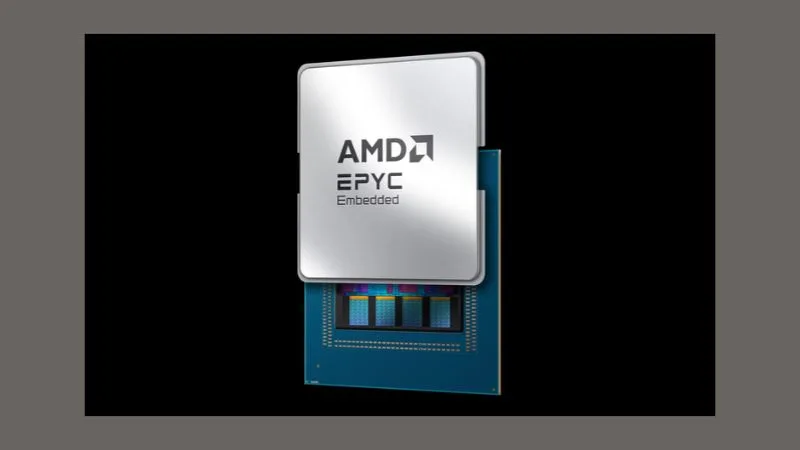
The computer chip manufacturer, AMD, has added to its line of industrial processors with the introduction of the new AMD EPYC Embedded 9006 Series SP7 CPUs. The new chips have been designed for specific, rugged machinery and not for everyday office computers. These new chips have been designed using the advanced Zen 6 core technology. With up to 256 processing cores integrated into the single chip and fast PCIe Gen 6 and CXL 3.1 connectivity, the new line-up offers up to 1.8 times more data throughput compared to the previous 5th Generation EPYC 9005 line.
While regular consumer-grade computers can be updated after a few years, embedded computers used in industrial applications like factory testing machines, large-scale data storage facilities, and internet security devices need to keep running without problems for almost ten years. To ensure that these requirements are met, AMD has promised to support the EPYC Embedded 9006 series for a period of seven years along with security updates throughout the time. Additionally, the chips have security features right from the start, including post-quantum cryptography for validating firmware updates.
The release of the processors is directly dictated by the fast-growing infrastructure of artificial intelligence. The more tech companies build AI data centers, the more data gets transferred across the network. With slower hardware, the systems which will be responsible for testing the new memory chips, securing the networks of corporations and storing big data sets may become bottlenecks. The new processors from AMD are designed to provide the required computational power, memory bandwidth and input/output capabilities to ensure the proper functioning of the systems.
Salil Raje, senior vice president and general manager of AMD’s Adaptive and Embedded Computing Group said that as AI infrastructure grows, it is crucial to develop the supporting systems to not slow down the whole process. The EPYC Embedded 9006 SP7 processors have data center performance in embedded hardware to help the manufacturers improve the performance of the equipment without increasing power consumption. This, along with the guaranteed long-term availability of the chips, gives manufacturers a solid basis for building their next-generation hardware.
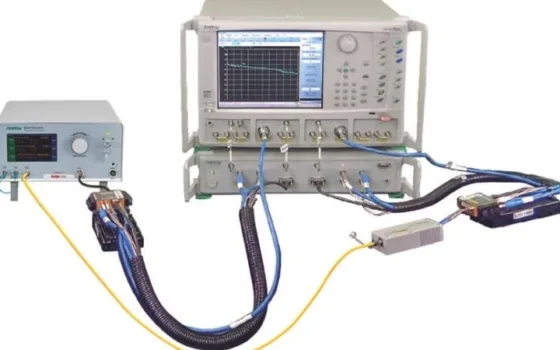
In terms of practical implementation, AMD has chosen three main areas where the new chips will be deployed. The first is semiconductor automated test equipment or ATE. Before any new memory sticks or high-speed connectors could be shipped, they have to go through rigorous tests performed by the factory machinery. The EPYC Embedded 9006 becomes the brain controlling all of the validation tasks involving high-speed DDR5 and new MRDIMM memory modules, thus enabling manufacturers to conduct a lot more hardware tests simultaneously.
The second important area is represented by high-end network security. In modern data centers, ultra-high speed 400G and 800G networks transmit huge amounts of internet traffic. Enterprise firewalls use the EPYC Embedded 9006 as the core of their system that analyzes the data, applies security rules, and directs the traffic to the security accelerators. The new chips increase the firewall data throughput by 1.3 times compared to the previous generation.
Last but not least, the processors are designed to cope with contemporary enterprise storage needs. It takes a lot of processing power to store and access huge volumes of data used for AI training purposes. The new EPYC processors can operate at high speeds with NVMe storage drives and accelerate background processes such as data compression, caching, and RAID redundancy protection by 1.5 times faster than the previous generation.