
Tata Electronics is ready to take on the international semiconductor industry through the use of artificial intelligence, partnerships with local suppliers and extensive training of its workforce. Addressing the Bengaluru Tech Summit 2026, Srinivas Satya, the head of the components segment and Chief Supply Chain Officer at Tata Electronics, detailed how the firm intended to compete with international chip manufacturers that had perfected themselves over decades of business.
Two huge projects are now under development in the country. The first project concerns a large fabrication facility for semiconductors, which will be constructed in cooperation with Taiwan-based PSMC (Powerchip Semiconductor Manufacturing Corporation). The facility will be built in Dholera, Gujarat, and requires an investment of ₹91,000 crore. At the same time, another project – a manufacturing and testing facility for chips is being built in Jagiroad, Assam, with an investment of ₹27,000 crore.
How AI can Help in Increasing the Efficiency of Factories from the Start
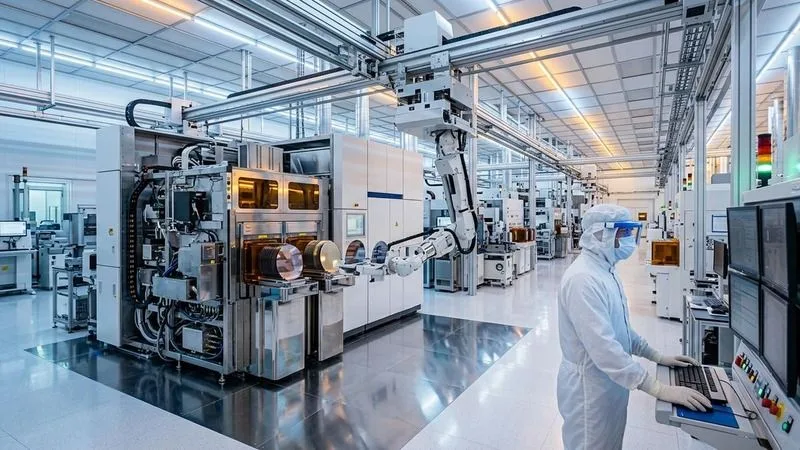
Instead of waiting until it is time to upgrade and improve the factory, Tata Electronics is implementing artificial intelligence in its factory machines and production lines from the very beginning. According to company estimates, utilizing AI to optimize equipment and workflow can result in 5 percent higher manufacturing yield and 5 percent increase in machine uptime.
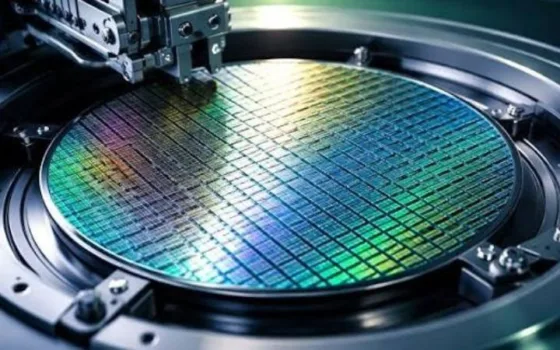
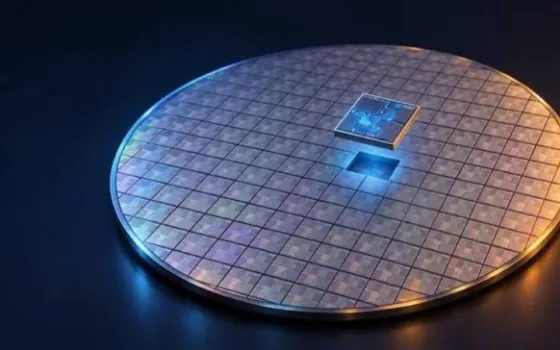
Yield in the process of chip manufacturing is defined as the proportion of functional chips obtained from one silicon wafer. Thus, any improvements are very valuable for the profitability of the company. As the machines are estimated to cost $5 billion to $6 billion out of the $11 billion budget of the plant, and operating costs amount to $500 million, every machine needs to be used with maximum efficiency. The Gujarat plant will be designed to manufacture up to 50,000 wafers per month, and machinery installation will begin next year before the plant launches in mid-2028.
Fostering Indigenous Suppliers Along with New Factories
The Tata Group understands the need for excellent chip factories; such plants cannot thrive without an efficient local supply network. While partnering with foreign technology partners, the group is trying to develop Indian players in engineering, material supplies, equipment maintenance, and plant services.
So far, Tata has done well in using this strategy in its present electronics plants where it has invited smaller Indian engineering companies on board the plant site to help create tailor-made manufacturing facilities. Tata aims to take this strategy further in the difficult semiconductor arena, where beyond huge equipment, chip plants will need special materials and extremely pure gases. At the summit, industrial partners like INOX Air Products stressed the importance of gas manufacturers joining hands with chip plants during design and planning stages.
Thousands of Skilled Workers
In order to operate the fabrication plants as well as packing units, Tata Electronics plans to employ and train around 5,000 engineers and technicians. Although there are many technical graduates in India, there still exists a gap in translating general knowledge of engineering into semiconductor industry experience.
In order to address this problem, Tata has hired experienced experts from 14 to 15 different countries and sent young Indian engineers to partner chip factories in Taiwan to learn on the job for three to six months. Additionally, the company has teamed up with some of the leading universities, such as IIT Bombay, IIT Gandhinagar, and IIT Guwahati, as well as L&T and Gati Shakti Vishwavidyalaya, to train construction workers for specialized facility construction.
The development on the ground proceeds steadily. In Jagiroad, Assam, construction of the first of the two major production buildings has been completed, while construction of the second building has commenced. When it becomes fully operational, the Assam factory will be able to process up to 48 million chips per day.