
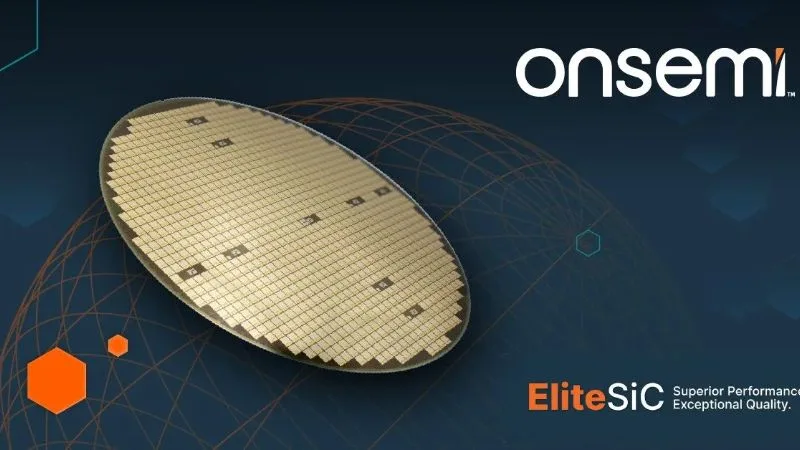
Onsemi has launched their fourth-generation platform called EliteSiC M4. This semiconductor technology has been developed on a high-performance trench structure and will serve as a new standard of performance for contemporary power systems. As it increases the switching and conduction capabilities by 30 percent, it will be easier to decrease the energy losses by 35 percent. Thanks to these improvements in performance, designers can now create more compact and powerful power systems for electric vehicles, artificial intelligence data centers, and industrial machinery.
In both the tech and energy worlds, the demand for electricity is rising at a much faster rate than the underlying hardware infrastructure that will provide it. For engineers developing the next generation of devices, the common challenge is clear: to provide orders of magnitude more power without having the device get any bigger, consume more energy as heat, or require large cooling mechanisms. EliteSiC M4 addresses this challenge head-on by putting more capability into existing physical constraints. With the legacy of over 16 billion miles driven on silicon carbide from onsemi vehicles worldwide, this new platform offers robustness with the efficiency to redesign entire systems.
In practice, these improvements bring clear advantages to three major industries:
- Data Centers for AI: Contemporary artificial intelligence is based on complex algorithms that require significant computing power. This puts additional strain on the electrical grid and cooling systems. The higher-density power conversion allows the data centers to produce more computing power from each megawatt of electricity. Consequently, the operators do not need to increase their power infrastructure as fast as they increase their server capacity.
- Electric Vehicles: Car manufacturers are constantly trying to improve performance and increase driving distances in electric vehicles. The higher the power levels of the electric drivetrain, the harder it is to design the traction inverters in terms of thermal, size, reliability, and efficiency considerations. With the help of EliteSiC M4, the carmakers can design smaller and more efficient traction inverters that waste less energy from the battery, thus increasing driving distance.
- Energy Infrastructure: The renewable energy installations, battery storage, and high-voltage grid systems require efficient power conversion to save the electricity. The reduction of conversion losses and smaller footprint of the components allow the new platform to improve the energy efficiency of the solar and energy storage systems.
Indeed, the use of trench architecture opens up tremendous possibilities for the technical development compared to the previous generation, but without any compromise on the reliability of the semiconductors in the long term. On resistance has decreased by 20 to 50 percent, which reduces heat production at the usual operation while making the switching faster. At that, switching performance has been improved significantly, increasing by 67 percent in the hard-switching and 50 percent in the soft-switching mode. The figures mentioned allow designing extremely small power supplies.
Finally, the EliteSiC M4 was created with easy integration and extreme endurance in mind. It is compatible with different types of chip packages – from the top-side-cooled surface-mount devices to high-power modules – so that the manufacturers will not need to make dramatic changes to their production process. Moreover, the semiconductors are resistant to extreme conditions – they are qualified to endure temperatures up to 185 degrees Celsius and even higher. Such endurance allows using them in high-voltage automotive as well as aerospace and space equipment.
In terms of availability, the EliteSiC M4 750V bare die, which is particularly designed for automotive traction inverters, is currently available to customers right away. onsemi will be adding other products up to 1200 volts from 2027 onwards.