
The city of Jagiroad in Assam’s Morigaon district, for quite some time, had been known mainly for the defunct Nagaon Paper Mill. However, now there is a complete transformation in store for the location as the clean room of Tata Semiconductor Assembly and Test begins the early production operations. Within about 60 kilometers of the location in Guwahati, the Ministry of Electronics and Information Technology is all set to unveil the region’s first-ever semiconductor packaging training lab for the youth. The facility would be managed by the National Institute of Electronics and Information Technology (NIELIT).
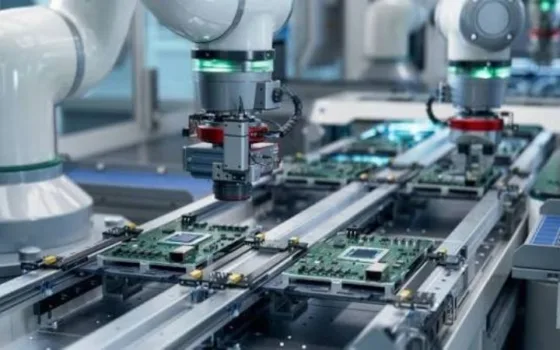
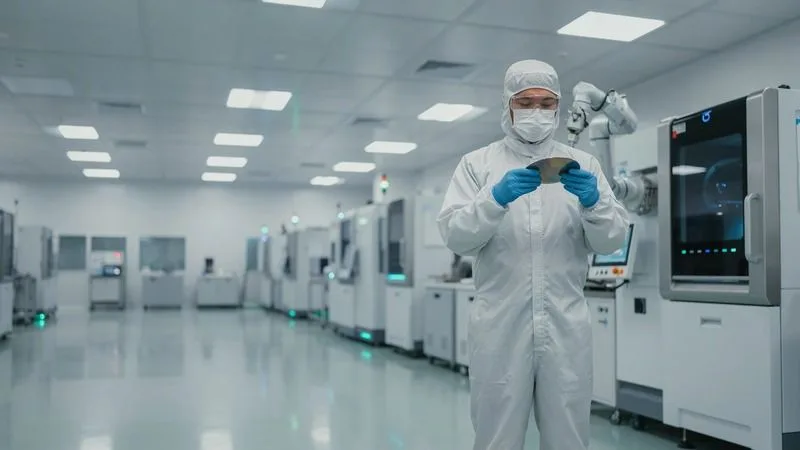
The combination of a large-scale factory and a training institute in one area addresses an existing problem. A factory cannot function without trained workers, while a training institute is of little use if there are no jobs available to the trainees. The new Guwahati training project will provide students with practical knowledge about how to assemble, test, mark, and package chips, as well as about static electricity control. In a chip packaging factory, a mere touch or spark of static electricity can destroy a chip that costs more than a day’s salary of a worker. Clean room procedures, wire bonding, molding, and chip inspection cannot be learned from books; they require constant practice on real equipment.
The setting up of this research lab is highly strategic considering its proximity to Tata Electronics’ huge factory costing 27,000 crore rupees in Jagiroad. The assembly and testing of chips in the plant have already begun with full commercial production starting from December or January 2026 or 2027. At its peak production, the plant will be able to produce about 48 million chips daily used in vehicles, telecommunication, consumer electronics, and artificial intelligence systems. This factory is anticipated to generate about 15,000 direct and 12,000 indirect jobs.
Finding adequate numbers of trained labor has been a problem until now. The company has been required to train their local employees in other parts of India. Although about two dozen women from Assam have been trained elsewhere and are now working in Jagiroad and hundreds more are in training, the cost and time involved in taking the youth to distant places for training have been high, and many families do not like to send their children so far away from home. A laboratory set up in Guwahati helps overcome this problem because it makes it possible for the students to be trained on modern machines close to where they will work, and Tata can influence the training according to its needs.
This training lab forms part of a larger educational network being built in the state. NIELIT and Tata Electronics entered into a memorandum of understanding in January 2025 where they would conduct certificate courses, diploma programs, and internships, merging the industrial experience of Tata Electronics and teaching network of NIELIT. Moreover, Union Minister Ashwini Vaishnaw outlined the plan to establish a new NIELIT campus in Jagiroad, while IIT Guwahati collaborated with Tata Electronics to form a research and engineering center. The combination of these programs forms a clear pathway for local talent with IIT Guwahati developing engineers and researchers and NIELIT developing technicians and machine operators.
Despite the attention paid by the Indian public to massive plants manufacturing silicon wafers from scratch, the actual assembly and packaging of chips generate more jobs and provide the fastest way for India to compete internationally. As national funding is growing with the India Semiconductor Mission, the issue of recruiting specialists has become more pressing than securing finances. NIELIT already has experience with training specialists in the region and has trained more than 1.7 lakh people at its centers in Assam.
More than mere occupations, this move is indicative of the much larger cultural change for the youth of Assam and of the rest of the Northeast as a whole. In the past, the youths from that region were focused on getting employment in the government services, tea and oil industries, or in other big cities such as Bengaluru and Delhi. For the first time in their lives, they will be able to find decent, global standard employment in the form of semiconductor factories right at their doorstep.
To ensure the success of this endeavor in the long term, there would be a need for the colleges and technical institutes in the area to have trainers well-versed in clean room processes, while the parents should view these occupations as full-fledged careers and not temporary jobs. Training needs to extend to include lucrative occupations in addition to operating machinery, such as repair work, failure analysis, and process engineering, with funds being provided to upgrade laboratory machinery. The laboratory in Guwahati will find success if it is able to track its graduates and link them to jobs in the Jagiroad plant and its vendors.